

External Director Roundtable Discussion
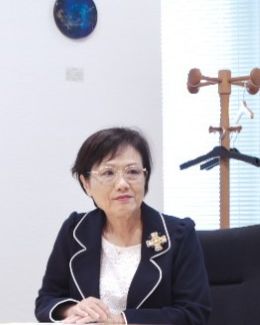
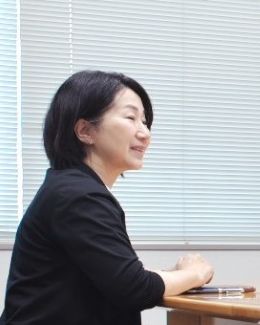
Following the Annual General Meeting of Shareholders held on June 23, 2026, EIZO's governance structure entered a new stage. To mark this transition, EIZO invited its Independent External Directors to participate in a roundtable discussion and share their perspectives on the new management structure and their future roles as External Directors.

A New Stage in the Governance Structure
How do you view the transition to the new management structure and Board composition effective June 23?
TI: I view the retirement of Chairman Jitsumori, who led the Company for many years, as a major turning point for EIZO. I am particularly interested in how leadership will be succeeded and how it will evolve going forward.
MO: I agree. With Chairman Jitsumori's retirement, I believe each executive will feel an even stronger sense of individual responsibility and initiative. Rather than relying on a single charismatic leader, I hope the Company will be led by the collective strength of the management team.

TI: Regarding the management structure, I have seen the development of the next generation of executive talent over the past several years, as well as the Company's efforts to cultivate and promote that talent. This gives me confidence in the future. I see this as an opportunity for EIZO to preserve the strengths it has built over many years while embracing changes that reflect the needs of a new era, and I have high expectations for what lies ahead.
JM: As reflected in the message President & CEO Ebisu shared with employees upon assuming his new role, I see this as an opportunity for the Company to become more transparent in its decision-making process and strengthen its commitment to collective execution once decisions are made. As an Independent External Director, I hope to contribute to greater transparency in discussions and to decision-making that incorporates diverse perspectives.
MO: With two women now serving on the Board, its composition has also evolved. As society continues to change and the advancement of women gains momentum, I would like to see further discussions not only on women's advancement but also on diversity and talent development as strategic management priorities.
TI: I agree. Looking back over the four years during which Director Osuna has worked tirelessly in this area, I feel the Company has changed considerably. As the external environment continues to evolve, I believe these reforms have been driven not only by Chairman Jitsumori's leadership but also by the efforts of other executives. If the Company continues these efforts, I believe it will further evolve into an organization that responds effectively to society's changing expectations.
Enhancing Board Effectiveness
Under the new management structure, what role do you believe Independent External Directors should play?
TI: I believe it is important not to be overly restrictive toward new initiatives and ideas, but instead to provide oversight and advice from a constructive perspective. One of the key challenges going forward will be the evolution of the decision-making process. How will the Company transition from a structure built around strong leadership? What should change, and what core strengths should be preserved? As Independent External Directors, we intend to continuously oversee this transformation and provide the necessary guidance. I also believe that optimizing the business portfolio and developing the next generation of management talent are critical priorities, and I would like to see continued discussion on these topics.
MO: Over the past four years as an Independent External Director, I have had many opportunities to engage with Chairman Jitsumori and President & CEO Ebisu, which has deepened my understanding of the Company. Going forward, I would like to expand that dialogue by engaging more directly with Operating Officers closer to the front lines of the business. By gaining a more concrete understanding of the Company's challenges and future vision, I hope to provide even more effective advice.
JM: Even when I was working in sales, EIZO was recognized as a brand specifically chosen by customers. I believe the Company's ability to maintain that value over time lies at the heart of its competitive strength. As I continue to deepen my understanding of EIZO's broad range of businesses, I also see it as an important responsibility to draw on my experience with many different companies to provide candid observations from an external perspective and serve as an effective source of oversight where improvements may be needed. Through these efforts, I hope to contribute to the enhancement of corporate value.
Enhancing Long-Term Corporate Value
What do you see as the key challenges and priorities for EIZO's mid- to long-term initiatives?
TI: I believe the current Mid-Term Business Plan clearly communicates the Company's direction and strategic priorities, and I appreciate the clarity of the initiatives being pursued under the plan. Given the current business environment, the key challenge is how to translate the plan into execution. I understand that management continues to engage in active discussions on this issue, and I believe that by acting on the conclusions reached through those discussions, the Company can return to generating stable Operating Profit at an early stage. Looking ahead, I believe an important priority will be establishing an execution framework with clearly defined responsibilities and authority. Clarifying accountability and execution responsibilities, including across overseas Group companies, will be essential to the successful implementation of the Mid-Term Business Plan and the creation of further corporate value. I also hope to see specific initiatives implemented promptly to make more effective use of the Company's strong equity base.
MO: I believe we are entering an era of even greater uncertainty and complexity. In such an environment, advancing mid- to long-term initiatives requires each individual to sharpen both their understanding of current conditions and their ability to anticipate future developments. I hope that my global experience and perspective can contribute to these efforts.
JM: I believe management has carefully considered the Company's challenges and steadily advanced the initiatives that need to be addressed. Looking ahead, however, as President & CEO Ebisu has repeatedly emphasized, success will depend on how quickly the Company can execute. By leveraging EIZO's free and open corporate culture, I hope the Company can accelerate decision-making and translate decisions into action more quickly.
Achieving Capital Efficiency & Growth Investment
How do you view management from the perspective of the Company's relationship with the capital markets?
TI: EIZO began exploring approaches suited to its circumstances at an early stage, when greater emphasis was first placed on management that is conscious of capital costs and stock price performance. As market attention to indicators such as ROE and PBR has increased and companies have accelerated efforts to improve these metrics, EIZO has also made steady progress by establishing targets and incorporating them into management practices. In particular, with respect to ROE, the Company has clarified both its targets and the initiatives required to achieve them, and a stronger focus on ROE has begun to take root through measures such as incorporating ROE indicators into executive remuneration. I also recognize that medium-term targets have been established, quantified, and made visible for other management indicators. Going forward, it will be important to further strengthen execution management against these indicators and clarify which metrics should be used internally, including for evaluating individual businesses.
MO: From a cash allocation perspective, another key challenge is how best to utilize the Company's strong financial foundation. Investment in research and development with a view to future business opportunities will become increasingly important. To determine where investments should be directed, I believe stronger collaboration is needed both across internal functions and with external partners. The Company should continue to broaden its perspective by leveraging customer insights gained through sales activities, information gathered by developers, and an understanding of initiatives being pursued by other companies. Balancing investments that support future growth with improvements in capital efficiency will be essential to the enhancement of corporate value.


