

Respect for Human Rights
Respect for human rights is a key corporate social responsibility for which we have established the EIZO Group Human Rights Policy. It is intended to establish a safe, secure, prosperous, and sustainable society by correctly understanding and recognizing the laws, culture, religion, and values of each country and region. We strive to deeply incorporate this policy into group business and advance efforts to respect human rights with the understanding and cooperation of all our business partners, suppliers, and other parties associated with the products and services of the group.
EIZO Group Human Rights Policy
EIZO Corporation and all EIZO Group companies (hereinafter referred to as the “EIZO Group”) recognize that respect for human rights is an important social responsibility for businesses. We strive to properly understand and acknowledge the laws, cultures, religions, values, and other factors in each country and region. With the goal of realizing a safe, secure, and prosperous sustainable society, we hereby establish the “EIZO Group Human Rights Policy” (hereinafter referred to as the “Policy”) and commit to adhering to it.
- 1. Basic Policy on Human Rights
-
- We respect, protect, and do not infringe upon the human rights of individuals involved in our business.
- We respect internationally recognized standards and the laws and regulations, cultures, histories, religions and customs of all countries and regions where we do business.
- We respect and support the following international principles and standards on human rights.
- the Universal Declaration of Human Rights
- the United Nations Guiding Principles on Business and Human Rights
- the ILO Declaration on Fundamental Principles and Rights at Work, issued by International Labor Organization
- the Ten Principles of the United Nations Global Compact
- the OECD Guidelines for Multinational Enterprises
- the Code of Conduct of the Responsible Business Alliance (RBA)
- the United Nations Declaration on the Rights of Indigenous Peoples
- the International Labour Organization (ILO) Convention No. 169 concerning Indigenous and Tribal Peoples in Independent Countries
- 2. Scope of Application
- The Policy applies to all individuals working for EIZO Group (hereinafter referred to as "Employee(s)"). We also require our suppliers and business partners to support this Policy and to respect human rights.
- 3. Guarantee of Humane Treatment and Prohibition of Discrimination and Harassment
-
- We will never engage in any form of harsh or inhumane treatment including violence, gender-based violence, sexual harassment, sexual abuse, corporal punishment, mental or physical oppression, bullying, public humiliation, or verbal abuse towards anyone involved in EIZO Group’s business activities.
- We will never engage in discrimination or harassment based on Employee’s race, skin color, age, gender, sexual orientation, gender identity and expression, ethnicity, nationality, disability, pregnancy, religion, political affiliation, union membership, military service, protected genetic information or marital status in our business activities. Additionally, we will make reasonable accommodation for Employees' disabilities or religious practices.
- We will never allow Employees or prospective Employees to undergo medical tests, including pregnancy or virginity tests, or physical exams that could be used in a discriminatory way, except as necessary to comply with laws and regulations, to ensure workplace health and safety, or to maintain the health of Employees.
- 4. Guarantee of Freely Chosen Employment
-
- In our business activities, all forced, bonded (including debt bondage) or indentured labor, involuntary or exploitative prison labor, slavery or trafficking of persons are prohibited.
- We will not impose unreasonable restrictions on Employees’ access to facilities provided by EIZO Group (including dormitories and housing for Employees), nor on their free movement within such facilities.
- We will provide Employees with a written employment agreement in their native language or a language they understand that contains a description of terms and conditions of employment. A foreign migrant Employee must receive a written employment agreement prior to his/her departing from his/her country of origin and no substitution or changes are allowed in the employment agreement upon arrival in the country where the EIZO Group, in which he/she works, is located, unless these changes are made to meet local laws and provide terms equivalent or superior to the original agreement.
- We guarantee the freedom of Employees to leave work at any time or terminate their employment without penalty if reasonable notice is given by the Employee as per his/her employment agreement.
- We will not hold or otherwise destroy, conceal, or confiscate Employees’ identity or immigration documents, such as government-issued identification, passports, or work permits. We can only hold such documentation if such holdings are required by law. In this case, at no time should Employees be denied access to their documents.
- Employees shall not be required to pay any recruitment fees or other related fees for their employment. If any such fees are found to have been paid by Employee, such fees shall be fully repaid to the Employee.
- 5. Prohibition of Child Labor and Work Restrictions for Young Workers
-
- In our business activities, child labor is prohibited. The term “child” refers to any person under the age of 15, or under the age for completing compulsory education, or under the minimum age for employment in the country, whichever is greatest.
- We will not allow Employees under the age of 18 (Young Workers) to engage in work that is likely to jeopardize their health and safety, including night shifts and overtime.
- In order to comply with the preceding two paragraphs, when concluding an employment agreement with an Employee, we will verify the employee's age by means of a document issued by a public institution.
- We will ensure proper management of student workers through proper maintenance of student records, rigorous due diligence of educational partners, and protection of students’ rights in accordance with applicable laws and regulations. We will provide appropriate support and training to all student workers. In the absence of local law, the wage rate for student workers, interns, and apprentices shall be at least the same wage rate as other entry-level workers performing equal or similar tasks.
- 6. Guarantee of Working Conditions and Workplace Environment
-
- We will properly manage the working hours of Employees and will not allow them to work more than the maximum hours stipulated by the laws and regulations of the countries and regions where we do business. Weekly working hours shall not exceed 60 hours, except in emergency or unusual situations. All overtime must be voluntary. Employees will be allowed to take at least one day off every seven days.
- We will pay compensation and provide benefits to Employees in compliance with all laws and regulations regarding minimum wages, overtime, and benefits in the countries and regions where we do business. Compensation for overtime will be paid at a rate higher than the regular hourly rate. No wages will be deducted as a disciplinary measure.
- For each pay period, we will provide Employees with a timely and understandable wage statement that includes sufficient information in their native language or a language they understand to enable the Employee to verify accurate compensation for work performed.
- We will uphold the principle of "equal pay for equal work," ensuring that workers engaged in the same work receive the same wages regardless of employment type (regular/non-regular employees), race, religion, nationality, or other factors.
- We will comply with all labor safety and health laws in the countries and regions where we operate, protect the safety and health of Employees, and provide a work environment that supports both their physical and mental well-being.
- 7. Freedom of Association
-
- We will respect the right of all Employees to form and join labor unions, to bargain collectively, and to participate in peaceful assembly of their own choosing as well as respect the right of Employees to refrain from such activities.
- We will never engage in discrimination, retaliation, intimidation, harassment, or any other disadvantageous treatment of Employees for exercising their rights to form or join labor unions, engage in collective bargaining, or participate in peaceful assemblies.
- We will share opinions and concerns regarding working conditions and management practices presented by Employees and jointly work to resolve these issues through honest and constructive discussions.
- 8. Respect for Indigenous and Local Community Rights
-
- We will respect the rights, cultures, and customs of indigenous and local communities.
- We will take necessary measures in accordance with relevant international standards and laws to prevent and mitigate any negative impact of EIZO Group's business activities on the rights of indigenous and local communities.
- 9. Fair Business, Advertising and Competition
-
- We fully recognize the importance of the impact of our advertising expressions on society and will conduct our advertising and marketing activities with full consideration of our social responsibilities.
- We will always use expressions based on facts and will never use expressions that may misrepresent the characteristics or quality of our products and services.
- We will never use expressions that discriminate against specific individuals, groups, or social groups, or that infringe on the rights or dignity of specific individuals, groups, or social groups.
- We will never use expressions that justify ideas that are contrary to the spirit of democracy, acts that violate the laws and regulations of each country or region, militarism, war, etc.
- 10. Human Rights Due Diligence
-
- We will conduct human rights due diligence to identify, prevent, and mitigate any negative human rights impacts resulting from EIZO Group's business activities.
- We will immediately take appropriate corrective actions if the implementation of human rights due diligence reveals that EIZO Group has caused or contributed to human rights violations.
- We will provide regular and ongoing training to Employees to ensure that human rights due diligence is understood and effectively implemented.
- 11. Relief for People Who Have Suffered Human Rights Violations
-
- We will establish appropriate consultation, reporting, and whistleblowing systems to prevent and correct actions that violate this Policy.
- We will protect the victims and the individuals who have consulted, reported, or blown the whistle in the event of human rights violations and provide support for the victims. We will never tolerate retaliation against victims or those who have raised concerns.
-
- *This Policy is subject to regular oversight by the Board of Directors of EIZO Corporation.
Mr. Yoshitaka Jitsumori
Chairman & CEO
EIZO Corporation
April 18,2002 (Established)
April 17,2025 (Revised)
Human Rights Advancement System
We have designated respect for human rights as one of EIZO's materialities. We have established a Human Rights Subcommittee within the Sustainability Committee, which reports directly to the Board of Directors, to advance human rights initiatives in accordance with the UN Guiding Principles on Business and Human Rights and other international standards.
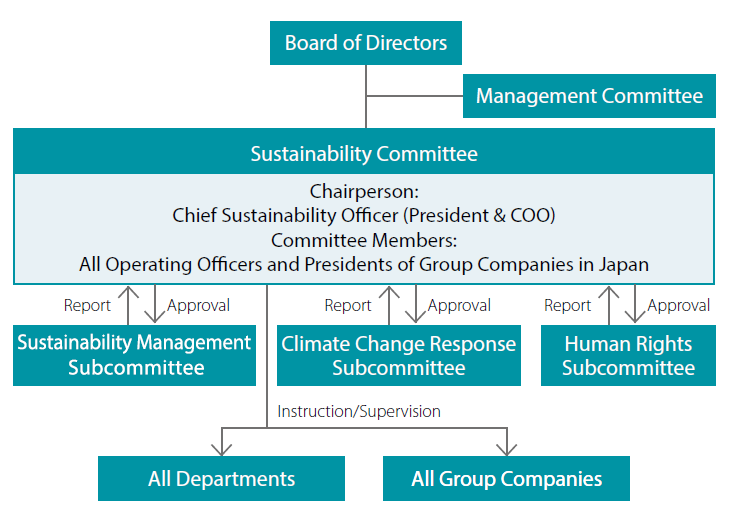
Human Rights Due Diligence
Advancement of Human Rights Due Diligence (HRDD)
In accordance with the UN Guiding Principles, EIZO Group is advancing human rights due diligence (HRDD) to prevent and mitigate human rights risks throughout our entire group’s value chain. Our HRDD consists of four steps: (1) identification and assessment of human rights risks (Plan), (2) prevention and mitigation of the human rights risks (Do), (3) evaluation of the effectiveness of our prevention and mitigation measures (Check), and (4) information disclosure (Act). By operating this PDCA cycle and reflecting the results obtained into our Human Rights Policy, etc., we will continuously improve our overall efforts regarding “respect for human rights.”
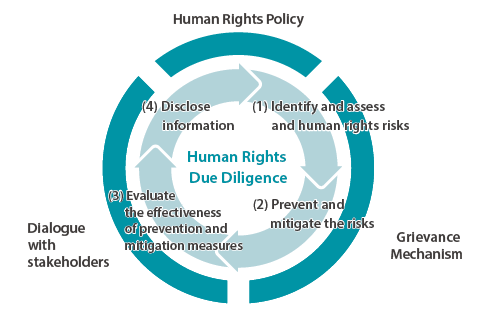
HRDD Initiatives
Step 1: Identification and Assessment of Human Rights Risks
In FY2023, the first year of our group's HRDD initiatives, the Human Rights Subcommittee played a central role in identifying and assessing human rights risks.
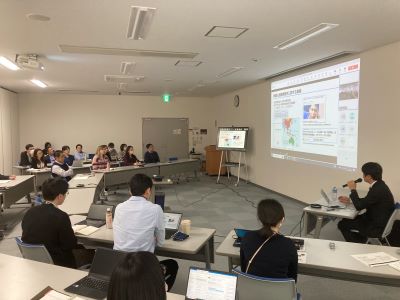
First, to deepen the understanding of the Human Rights Subcommittee members, a training session on “Business and Human Rights” was held by Mr. Hidemi Tomita, Representative Director of LRQA Sustainability Co., Ltd. Then, with Mr. Tomita’s guidance, human rights risks were identified for all group companies in Japan. All identified risks were classified into 11 representative categories of human rights risks in accordance with the “Guidelines on Respecting for Human Rights in Responsible Supply Chains” issued by the Ministry of Economy, Trade and Industry of Japan. [Table 1]
In assessing the human rights risks, we visualized the status of our relevant human rights risks by quantitatively assessing each category of human rights risk and each stakeholder in our value chain based on the two criteria of “likelihood of occurrence” and “severity.” [Table 2]
Based on the assessment results, we then discussed with the Sustainability Committee, including management, and identified human rights risks that require priority measures as “critical human rights issues,” as shown below, and reported these to the Board of Directors. [Table 3]
- Human trafficking and involuntary labor
- Collection of recruitment fees and debt labor
- Infringement of health and safety
- Deprivation of learning opportunities
- Coercion of labor union participation/non-participation
- Adverse treatment in labor-management negotiations
- Discrimination based on type of industry or contents of work
- Infringement of health and safety due to physically demanding work, dangerous machinery, chemical substances, etc.
- Unintended relocation
- Discrimination based on gender or nationality
- Discriminatory expressions in products and publicity
- Disparity in treatment based on gender or job classification
- Impediments to working environment due to harassment (sexual harassment, power harassment, maternity harassment, paternity harassment, care harassment, customer harassment, etc.)
- Insufficient consideration for foreign workers and minorities
- Deterioration of living environment due to business activities
- Long working hours due to staff shortages and urgent work
- Insufficient rest breaks and leave
- Unpaid wages and unreasonable wage deductions
- Insufficient provision of benefits
- Infringement of user safety and health due to inappropriate information provision
- Infringement of privacy through leakage of personal information
- Copyright infringement
- Slander and defamation
- Impediments to fair business practices through bribery
(i) All human rights risks within the supply chain
(ii) Discrimination and harassment based on race, disability, religion, social origin, gender, or gender identity
(iii) Excessive or unreasonable working hours
(iv) Business ethics
[Table 1] Identification of Human Rights Risks
| Category of human rights risks | Specific examples of human rights risks identified | |
|---|---|---|
| 1. Forced labor |
| |
| 2. Child labor |
| |
| 3. Infringement of freedom of association and the right to collective bargaining |
| |
| 4. Discrimination in employment and occupation |
| |
| 5. Infringement of safe and healthy working environment |
| |
| 6. Infringement of freedom of residence and relocation |
| |
| 7. Discrimination based on race, disability, religion, social origin, gender, or gender identification |
| |
| 8. Infringement of rights of indigenous and local people |
| |
| 9. Excessive and unreasonable working hours |
| |
| 10. Unpaid wages |
| |
| 11. Others | Proper use of products and health |
|
| Technology and privacy |
|
|
| Business ethics |
|
|
[Table 2] Assessment of Human Rights Risks

[Table 3] Identification of “Critical Human Rights Risks”
| Critical human rights issues | Stakeholders negatively affected | Current Measures | |||
|---|---|---|---|---|---|
| Supplier | Employee | Local Community | Customer | ||
|
All human rights risks within the supply chain |
● |
|
|||
|
Discrimination and harassment based on race, disability, religion, social origin, gender, or gender identification |
● | ● | ● |
|
|
|
Excessive or unreasonable working hours |
● | ● |
|
||
|
Business ethics |
● | ● | ● | ● |
|
Step 2 and beyond
We will evaluate the effectiveness of each of the current measures for the abovementioned “critical human rights issues” and consider the need for alternative or additional measures. (Step 2 and Step 3).
External Evaluation
As shown below, Mr. Hidemi Tomita, Representative Director of LRQA Sustainability Co., Ltd., has evaluated our HRDD efforts to date positively. We take Mr. Tomita's comments seriously and will continue to improve our efforts to respect human rights by regularly reviewing human rights risks, improving the effectiveness of our human rights risk prevention and mitigation measures, etc.
Comments from Mr. Hidemi Tomita, Representative Director of LRQA Sustainability Co., Ltd.
While this is the first time that EIZO has attempted to assess human rights risks, I believe that the assessment was conducted through an appropriate process. The methodology of comprehensive assessment by mapping risks based on severity and likelihood of occurrence, in consideration of key stakeholders (rights holders) throughout the value chain, including suppliers, employees, local communities, and customers, is in line with international guidelines and other relevant standards. Four critical human rights issues centered on the supply chain were ultimately identified this time, and I would say that these results are also not particularly different from the situation of other companies in the electronics industry to which EIZO belongs.
It is expected that these critical human rights issues will first be investigated and rectified onsite. At the same time, since engagement with stakeholders who may be affected by human rights risks was not necessarily sufficient in this assessment, ongoing dialogue with them is expected. In addition, since a grievance mechanism has been introduced, it is expected that human rights risks will be continuously reviewed reflecting the content of reports made to the reporting desk.
Grievance Mechanism (Remedy)
We became a full member of the Japan Center for Engagement and Remedy on Business and Human Rights (JaCER) in April 2024 and are working to develop the grievance mechanisms required by the UN Guiding Principles on Business and Human Rights.
JaCER provides a non-judicial "Engagement and Remedy Platform" for the redress of grievances based on the Guiding Principles.
Through this platform, we accept complaints and reports of violations and alleged violations of human rights and other responsible business conduct from a wide range of external stakeholders, including our global supply chain.
With JaCER's professional support, we are committed to fulfilling our responsibility to address human rights issues by improving the effectiveness and efficiency of the grievance redress process and by ensuring the legitimacy of the grievance mechanism.
Notes
- The content of complaints and reports accepted through the grievance mechanism and the personal information of the whistleblowers are kept strictly confidential.
- Whistleblowers are protected from retaliation for blowing the whistle.
- The progress of grievance cases can be tracked on the "Grievance List", which is regularly updated on the JaCER website. (Whistleblowers and relevant companies will remain anonymous.)
- Reports from EIZO Group employees will continue to be accepted through the internal whistleblowing system.
UK Modern Slavery Statement
We have published the Statement regarding our commitment to preventing modern slavery and human trafficking in response to Section 54 (1) of the UK Modern Slavery Act 2015.
Please refer to the following link for details.


